The Human Factor in AI Security: Building a Culture of Responsible AI Use
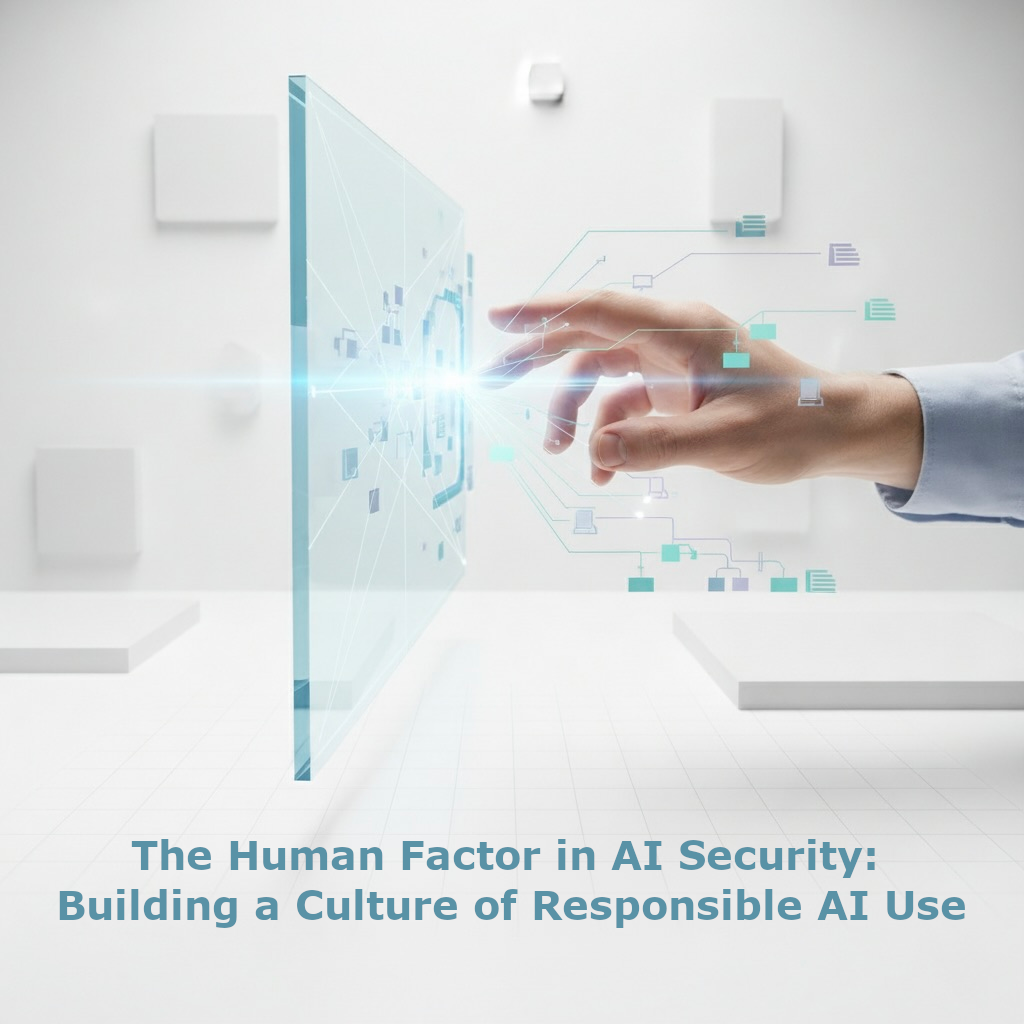
The rapid adoption of artificial intelligence is transforming businesses, promising increased productivity and innovation. However, a critical and often overlooked security risk is emerging: the well-intentioned, yet ungoverned, actions of employees leveraging AI tools. As a recent report highlights, the most immediate and significant threat posed by generative AI isn’t a sophisticated external attacker, but the productivity-driven employee operating without effective guardrails. This isn’t about malicious intent, it’s about a widening “Access-Trust Gap”, the disconnect between what security teams believe they control and how employees actually access and use data with AI.
This shift demands a new approach to security, one that moves beyond simply blocking access and focuses on enabling employees to use AI responsibly. Organizations are actively encouraging AI adoption, with 73% of employees empowered to leverage it in their work. Yet, a concerning 37% admit to only following company AI usage policies “most of the time.” This isn’t a minor deviation, it’s a systemic breakdown in governance, creating opportunities for data breaches and new architectural vulnerabilities.
The Rise of Shadow AI & The Need for Proactive Governance
The unauthorized use of AI tools, dubbed “Shadow AI,” is becoming increasingly prevalent. More han one in four employees (27%) admit to using AI applications not approved by their employer. This isn’t simply a modern iteration of “Shadow IT.” Shadow AI represents a far greater risk, acting as a direct conduit for sensitive corporate data to be fed into public AI models with opaque data-handling policies.
Employees are using these unsanctioned tools for core business functions, including sharing customer call notes, analyzing sensitive data, and even drafting performance reviews. As Nick Tripp, CISO at Duke University, points out, “I know we've got data going into these LLMs that we don't have control over. The best we can do is sign enterprise agreements that offer some legal protections, but if someone uses a tool we don't have an agreement for, there's no protection for us.”
This is where a proactive approach to AI Ethics & Governance is crucial. Simply identifying Shadow AI after the fact isn’t enough. Organizations need to equip employees with the knowledge to make informed decisions about AI tool selection and usage. At Red Mt AI, we believe the solution isn’t restriction, but empowerment through education. Our training programs directly address the Access-Trust Gap by building internal AI literacy and establishing clear, practical guidelines for responsible AI use. We don’t just tell you what not to do, we teach your teams why and provide approved alternatives.
Beyond Data Leaks: New Architectural Vulnerabilities & The Importance of Secure Integration
The risks extend beyond simply exposing sensitive data. The integration of AI tools into daily workflows is creating new architectural vulnerabilities that can bypass traditional security measures. A particularly concerning threat is “prompt injection,” where malicious instructions are embedded within webpages or documents, hijacking the behavior of AI agents.
These attacks can allow attackers to navigate internal systems, extract sensitive information, and even exfiltrate data, all without triggering traditional security alerts. As Patrick Opet, CISO at J.P. Morgan Chase, warns, many AI integrations “collapse authentication (verifying identity) and authorization (granting permissions) into overly simplified interactions, effectively creating single-factor explicit trust between systems on the internet and private internal resources.” This fundamentally weakens security architecture, granting vulnerable AI tools access to sensitive corporate resources.
Addressing these vulnerabilities requires a proactive approach to AI security, one that goes beyond simply blocking access. It requires understanding how AI tools interact with your systems, identifying potential attack vectors, and implementing robust security controls. Red Mt AI specializes in guiding organizations through this process. We don’t just offer solutions, we build your team’s ability to understand and mitigate these risks through hands-on training and knowledge transfer. We help you build a resilient security posture that can withstand the evolving threat landscape, ensuring secure AI integration from the outset.
Sustainable AI Adoption: From Risk Mitigation to Innovation Enablement
Ultimately, the key to mitigating these risks lies in empowering employees with the knowledge and tools they need to use AI responsibly. This means providing clear guidelines, offering approved AI solutions, and fostering a culture of security awareness. It’s about shifting the narrative from one of restriction to one of enablement, unlocking the potential of AI while safeguarding your organization.
Red Mt AI’s approach is centered on sustainable AI adoption. We don’t just deliver a quick fix, we equip your teams with the skills and knowledge to continuously adapt and innovate with AI securely. We believe that a well-trained workforce is your strongest defense against emerging AI-related threats.
Ready to build a secure AI strategy that empowers your employees and protects your valuable assets? Contact us and discover how Red Mt AI can help you navigate the complexities of AI security and unlock the full potential of generative AI.
